The Future of Marketing in 2025: How AI and Human Creativity Combine for Success

As the digital marketing landscape continues to evolve, 2025 promises to be a transformative year marked by the integration of artificial intelligence (AI) and the enduring value of human creativity. Experts predict that marketing strategies will increasingly hinge on hyper-personalization, data-driven insights, and a hybrid approach that combines AI’s efficiency with the emotional resonance of human touch. Here’s a comprehensive look at how these trends will shape the future of marketing.

The Power of Hyper-Personalization in Marketing

Personalization has evolved into a non-negotiable element of effective marketing. In 2025, AI will enable deeper and more scalable personalization than ever before. By analyzing vast amounts of customer data, AI will craft tailored experiences that resonate with individual preferences.

Key Features of AI-Driven Personalization

  • Dynamic Content Creation: AI tools will generate personalized content, including emails, social media posts, and product recommendations, at scale.
  • Predictive Analytics: Marketers will use AI to anticipate customer needs and preferences, ensuring timely and relevant interactions.
  • Enhanced User Experience: By leveraging real-time data, AI will create seamless and intuitive customer journeys across digital platforms.

SEO Advantage

  • Improved Engagement Metrics: Personalized experiences reduce bounce rates and increase time-on-site, key factors in Google’s ranking algorithm.
  • Keyword Optimization: AI tools can identify and target long-tail keywords aligned with user intent.

AI-Driven Efficiency in Digital Marketing

The ability of AI to process and interpret data at lightning speed will redefine marketing operations. However, this efficiency must be balanced with human oversight to maintain authenticity and brand alignment.

Advantages of AI-Enhanced Marketing

  • Voice Search Optimization: Conversational AI and voice search will streamline customer interactions, making brand engagement more accessible.
  • Campaign Optimization: AI algorithms will refine campaigns in real-time, maximizing ROI by targeting the right audiences with precision.
  • Performance Metrics: AI will enable incrementality-focused analytics, helping businesses measure the direct impact of marketing efforts on outcomes like site visits, leads, and sales.

SEO Integration

  • Voice Search SEO: Optimizing for voice queries will be critical as voice searches increase in popularity.
  • Real-Time Updates: AI-driven analytics allow for instant adjustments to keep content relevant and competitive.

Maintaining the Human Touch in Marketing

Despite the efficiency of AI, consumers still crave genuine human interactions. Marketers must ensure that their strategies include emotional depth and authenticity to foster trust and loyalty.

The Role of Human Creativity

  • Emotional Engagement: While AI can create content, it often lacks the emotional warmth and brand sentiment that human-generated content offers.
  • Brand Identity: Humans are better equipped to infuse content with the unique tone and values of a brand, ensuring consistency across campaigns.
  • Authentic Experiences: Personal interactions and storytelling foster deeper connections with audiences, addressing the growing demand for human ingenuity in an algorithm-driven world.

SEO Perspective

  • Building Backlinks: Authentic and emotionally engaging content is more likely to earn organic backlinks, improving domain authority.
  • Improved Shareability: Human-crafted stories resonate better on social media, increasing shares and driving traffic.

Ethical AI Practices and Sustainable Marketing

As AI becomes more prevalent, ethical considerations and sustainability will take center stage. Marketers must prioritize transparency and accountability in their AI applications.

Building Consumer Trust

  • Data Privacy: Ensuring compliance with data privacy regulations and respecting user consent are critical for maintaining trust.
  • Transparent AI Use: Clear communication about how AI is used to enhance customer experiences will reassure consumers.
  • Sustainable Marketing Practices: Brands that align with ethical and eco-friendly values will stand out in a competitive market.

SEO Benefits

  • Trust Signals: Transparent and ethical practices can improve user trust, reducing bounce rates and boosting conversions.
  • Positive Reviews: Consumers aligned with sustainable practices are more likely to leave positive reviews, influencing local SEO rankings.

The Hybrid Approach: Merging AI and Human Ingenuity

The most successful marketing strategies in 2025 will leverage a hybrid approach, using AI for efficiency while preserving the emotional appeal of human creativity. This combination will allow businesses to:

  • Scale their operations without compromising on authenticity.
  • Deliver highly personalized experiences that resonate on a deeper level.
  • Adapt quickly to changing consumer behaviors and market dynamics.

Insights from Industry Leaders

  • Casey Gannon, VP of Marketing and Technology Partnerships: “Personalization has evolved into a must-have. We are seeing a push for deeper personalization at scale, primarily driven by AI.”
  • Katherine Lee, Head of Marketing, USA: “While AI can create content quickly, it often lacks the brand sentiment and tone that human-generated content offers.”
  • Jason Grunberg, CMO: “Marketers will leverage AI to solve larger consumer problems, enhancing overall customer experiences and driving growth.”

Leveraging Data for Marketing Success

Data will continue to play a pivotal role in shaping future marketing strategies. In 2025, companies will focus on breaking down data silos and fostering data-driven cultures to maximize the potential of AI.

Preparing Data for AI

  • Data Integration: Unify data from multiple sources to create a comprehensive customer profile.
  • Real-Time Analysis: Use AI to analyze performance metrics and consumer behaviors instantaneously.
  • Insights for Decision-Making: Leverage data to inform strategic choices and anticipate market trends.

SEO Advantages

  • Data-Driven Keywords: Use AI tools to identify high-performing keywords.
  • Content Optimization: Leverage data insights to refine headlines, meta descriptions, and content for better rankings.

The Path Forward for 2025 Marketing Strategies

As we approach 2025, marketing strategies must evolve to navigate the rapidly changing digital landscape. By balancing advanced technologies like AI with the human touch, businesses can:

  • Enhance Customer Engagement: Provide meaningful and memorable interactions that build long-term loyalty.
  • Achieve Better Outcomes: Utilize data-driven insights to optimize campaigns and drive measurable results.
  • Stay Competitive: Embrace innovation while maintaining the authenticity that resonates with consumers.

The integration of AI and human creativity represents the future of marketing, offering unparalleled opportunities to connect with audiences in new and impactful ways. Companies that adapt to these trends will secure their place as leaders in the next era of digital marketing.

Also Read: Game-Changing Digital Marketing Trends Poised to Redefine E-Commerce in 2025


FAQs

1. How is AI changing personalization in marketing? AI enables deeper personalization by analyzing customer data to deliver tailored experiences, from dynamic content to predictive recommendations.

2. Why is human creativity still important in marketing? Human creativity adds emotional depth and brand authenticity, which AI-generated content often lacks, fostering stronger connections with consumers.

3. What ethical considerations should marketers keep in mind when using AI? Marketers must ensure transparency, respect user privacy, and align AI practices with ethical and sustainable values to maintain consumer trust.

4. How can businesses balance AI efficiency with a human touch? A hybrid approach leverages AI for scalability and data-driven insights while incorporating human creativity for emotional engagement and brand alignment.

5. What trends will dominate marketing strategies in 2025? Key trends include hyper-personalization, conversational AI, ethical marketing practices, and the integration of AI with human ingenuity to drive meaningful customer interactions.


Game-Changing Digital Marketing Trends Poised to Redefine E-Commerce in 2025

As e-commerce continues to evolve, 2025 promises to be a transformative year driven by innovative digital marketing trends. According to NetElixir, a leading e-commerce marketing agency, these trends will revolutionize how businesses connect with consumers, enhancing engagement and driving growth. Spearheaded by CEO Udayan Bose, NetElixir’s insights reveal groundbreaking opportunities that highlight the roles of AI, personalization, and sustainability in shaping the future of online retail.

1. Social Commerce Revolution: Driving Conversions Through Social Media

Social media platforms are becoming critical players in the e-commerce landscape. Currently contributing 7% of website commerce, platforms like Instagram and TikTok are expected to see this figure exceed 10% by 2025. Enhanced shopping integrations on these platforms are making it easier for consumers to discover and purchase products directly, solidifying social media’s role as a key influencer in purchasing decisions.

Implications for Businesses

For businesses, this trend underscores the importance of leveraging social media for advertising, engagement, and direct sales. Brands will need to:

  • Invest in platform-specific strategies to optimize reach.
  • Utilize shoppable posts and influencer partnerships to drive conversions.
  • Monitor emerging platforms to stay ahead of trends in social commerce.

2. The Voice Search Revolution: Transforming How Consumers Shop

Traditional search bars are being replaced by voice-activated and AI-powered chatbots, offering more intuitive ways for consumers to interact with online stores. By 2025, 50% of all online searches are projected to be voice-activated. Businesses must optimize their platforms for conversational commerce to stay competitive in this emerging trend.

Optimizing for Voice Search

To succeed in this space, companies will need to:

  • Develop content that aligns with natural language queries.
  • Implement structured data to improve voice search discoverability.
  • Integrate AI chatbots capable of handling complex customer interactions.

3. Personalized Shopping: The Era of Hyper-Customized Experiences

Advancements in AI and machine learning, coupled with real-time data utilization, are driving the demand for personalized shopping experiences. Consumers can expect highly tailored interactions that cater to their individual preferences. This trend will leverage connected devices to create seamless and engaging customer journeys.

Building Personalized Experiences

Hyper-personalization requires:

  • Collecting and analyzing consumer data to understand preferences.
  • Using predictive analytics to anticipate customer needs.
  • Implementing dynamic content that adapts to individual user behavior.

4. AI Shopping Agents: The New Frontier of Customer Engagement

AI shopping agents are revolutionizing customer engagement by offering hyper-personalized product recommendations. These agents enhance loyalty and conversion rates, providing businesses with powerful tools to connect with their audiences on a deeper level.

Benefits of AI Shopping Agents

  • Increased efficiency in managing customer queries.
  • Better targeting through advanced recommendation systems.
  • Improved customer satisfaction by delivering relevant solutions instantly.

5. Experimentation Powered by AI: Redefining Marketing Creativity

AI is pushing the boundaries of marketing creativity, enabling businesses to experiment with content creation, campaign optimization, and budget allocation. These advancements allow for more effective strategies and better returns on investment.

AI’s Role in Marketing Innovation

Businesses can leverage AI for:

  • Real-time campaign adjustments based on performance metrics.
  • Automated content generation tailored to specific audiences.
  • Advanced budget optimization to maximize ROI.

6. AI Agents Transforming E-Commerce: Efficiency Redefined

AI agents are taking over complex and routine tasks, reducing the need for human intervention while boosting operational efficiency. This shift allows businesses to focus on strategic growth, leveraging automation to enhance productivity and streamline workflows.

Strategic Applications of AI Agents

  • Automating inventory management and order processing.
  • Enhancing customer support through AI-driven solutions.
  • Enabling faster decision-making by providing actionable insights.

7. Conscious Commerce: Building Loyalty Through Sustainability

Sustainability is becoming a priority, with 70% of consumers globally favoring brands that align with their values. Conscious consumerism will emerge as a significant differentiator, enabling businesses to build trust and foster loyalty by demonstrating their commitment to ethical and sustainable practices.

Implementing Conscious Commerce Strategies

To align with this trend, companies should:

  • Adopt transparent supply chains and eco-friendly practices.
  • Highlight their sustainability initiatives in marketing campaigns.
  • Partner with organizations that promote social and environmental causes.

8. AR/VR Experiences: Immersive Shopping Redefined

Immersive technologies like augmented and virtual reality are reshaping the online shopping experience. By 2025, the AR market is projected to reach $50 billion, offering consumers interactive and memorable shopping experiences that enhance personalization and engagement.

Leveraging AR/VR in E-Commerce

Businesses can use AR/VR to:

  • Enable virtual try-ons for clothing, accessories, and cosmetics.
  • Create immersive virtual showrooms for product exploration.
  • Enhance brand storytelling through engaging, interactive content.

9. Evolution of Marketplaces: Luxury Meets Affordability

Marketplaces are evolving into distinct segments to address diverse consumer needs. Luxury platforms emphasize exclusivity, while discount marketplaces focus on affordability. This segmentation reflects shifting priorities and offers businesses new opportunities to cater to specific audiences.

Adapting to Marketplace Trends

To capitalize on this trend, brands should:

  • Differentiate their offerings based on target audience preferences.
  • Use marketplace analytics to refine product positioning.
  • Collaborate with niche marketplaces to reach specialized demographics.

10. AI-Driven Creativity: Revolutionizing Content Creation

AI-powered tools are unlocking new frontiers in creative storytelling and content creation. By leveraging these tools, businesses can elevate their marketing strategies, set new standards for innovation, and enhance their brand presence in a competitive market.

Enhancing Creativity with AI

  • Use AI to generate engaging video content and visual assets.
  • Personalize storytelling elements for different audience segments.
  • Experiment with new formats and platforms to drive engagement.

Conclusion

“The e-commerce landscape is at a tipping point,” says Udayan Bose, CEO of NetElixir. These ten trends highlight the transformative potential of AI, sustainability, and personalization in redefining digital marketing and online retail. Businesses that adapt quickly to these trends will position themselves as leaders in this dynamic and exciting era. By embracing these innovations, companies can deliver exceptional customer experiences, build lasting loyalty, and secure a competitive edge in the rapidly evolving e-commerce landscape.

Also Read: Google Enhances Transparency in Child & Teen Ad Policies


FAQs

1. Why is social commerce important in 2025? Social platforms are integrating shopping features, influencing consumer purchasing decisions and contributing a growing share to e-commerce sales.

2. How is voice search transforming e-commerce? Voice-activated searches and AI chatbots are replacing traditional search bars, making online shopping more intuitive and interactive.

3. What role does AI play in marketing experimentation? AI enables businesses to optimize content creation, campaign strategies, and budget allocation, driving more effective and innovative marketing efforts.

4. How will AR/VR impact online shopping? AR and VR technologies offer immersive experiences, allowing consumers to virtually interact with products, enhancing personalization and engagement.

5. What is conscious commerce, and why does it matter? Conscious commerce focuses on sustainability and ethical practices, aligning with consumer values to build trust and loyalty.

6. How can businesses prepare for these trends? Companies should invest in technology, embrace AI-powered tools, and prioritize customer-centric strategies to stay competitive in the evolving e-commerce landscape.

Google Gemini and the AI Race: Transforming Advertising in 2025

As artificial intelligence continues to revolutionize industries, 2025 is shaping up to be a pivotal year for AI in advertising. Google Gemini, the tech giant’s ambitious AI platform, stands at the forefront of this transformation. Touted as a game-changer, Gemini is expected to redefine how advertisers approach digital marketing while competing fiercely with industry leaders like OpenAI, Meta, and Apple. With a renewed focus on innovation and execution, Google aims to reclaim its dominance in the AI landscape.

AI: A Seismic Shift in Advertising

According to Google’s VP of global search ads and commerce, Brendon Kraham, the ongoing AI revolution is poised to surpass even the mobile revolution in its impact. This transformation is driven by three major developments:

  1. Evolving Search Behavior: AI is shifting search behavior beyond traditional keywords to more multimodal experiences that integrate text, voice, and visuals seamlessly.
  2. AI-Powered Creative Tools: These tools enable marketers to produce dynamic and personalized content at scale, enhancing user engagement and campaign effectiveness.
  3. Enhanced Measurement Capabilities: AI is improving advertisers’ ability to track performance across multiple channels, providing deeper insights and optimizing ad spend.

These advancements underscore the profound changes AI is bringing to digital marketing, compelling advertisers to adapt or risk obsolescence.

Gemini: Google’s AI Crown Jewel

Sundar Pichai, Google’s CEO, has positioned Gemini as a cornerstone of the company’s strategy to lead in AI innovation. Designed to address growing competition and regulatory challenges, Gemini embodies Google’s vision of an AI-driven future where technology solves real-world problems and delivers unmatched value.

Core Features of Gemini

  1. Multimodal Integration: Gemini seamlessly processes text, images, and voice inputs, offering a more intuitive and dynamic user experience.
  2. Scalable AI Capabilities: Leveraging Google’s infrastructure, Gemini delivers AI solutions that are both powerful and accessible across devices and platforms.
  3. Privacy-Centric Design: Despite its advanced capabilities, Gemini adheres to stringent privacy standards, ensuring user trust and compliance with global regulations.
  4. Real-Time Adaptability: Gemini’s ability to adapt to real-time data allows businesses to fine-tune campaigns, providing hyper-relevant messaging to target audiences.

By scaling Gemini into a universal assistant, Google aims to provide tools that not only enhance productivity but also empower advertisers with cutting-edge solutions.

Transforming Google Ads

As part of its broader AI strategy, Google is enhancing its core advertising products to align with the capabilities of Gemini. These updates aim to optimize performance and provide advertisers with a competitive edge in the digital marketplace.

Key Updates

  1. Performance Max: An all-in-one campaign tool powered by AI, offering automated insights and recommendations to maximize ad reach and effectiveness.
  2. Demand Gen: Designed to help advertisers drive demand by targeting the right audiences with tailored messages.
  3. Enhanced Search Capabilities: AI-driven search tools that prioritize relevance and user intent, making it easier for advertisers to connect with their target audience.
  4. Dynamic Ad Customization: Using real-time data, Gemini enables the creation of personalized ads that adapt to user preferences and behavior.
  5. Cross-Platform Insights: Advertisers can now track and analyze campaign performance across devices, channels, and demographics, ensuring a holistic view of success metrics.

These improvements reflect Google’s commitment to creating a seamless and efficient advertising ecosystem.

The Competitive Landscape

Google’s Gemini is entering a crowded and competitive field. Key players like OpenAI, Meta, and Apple are also vying for dominance in the AI space, each bringing unique strengths and strategies.

OpenAI

  • Strengths: OpenAI’s ChatGPT is synonymous with generative AI, offering intuitive and accessible solutions for both consumers and businesses.
  • Challenges for Google: Gemini must overcome OpenAI’s strong brand association with AI innovation.
  • Opportunities for Gemini: Google’s ability to integrate Gemini across its vast ecosystem of products and services could provide a distinct edge over standalone AI solutions like ChatGPT.

Meta

  • Strengths: Meta’s investments in AI-powered devices and assistants are reshaping user experiences across its platforms.
  • Challenges for Meta: Meta’s sprawling ecosystem may dilute its focus, leaving gaps that a more unified strategy like Google’s could exploit.
  • Opportunities for Google: By focusing on a cohesive approach, Google can present Gemini as a more reliable and streamlined solution for businesses and users alike.

Apple

  • Strengths: Apple’s integration of AI into its ecosystem emphasizes user privacy and simplicity.
  • Threat to Google: Apple’s methodical approach and strong consumer loyalty could redefine expectations for AI, particularly in the consumer technology space.
  • Opportunities for Google: By emphasizing scalability and cross-platform functionality, Gemini can appeal to businesses seeking versatile AI solutions that extend beyond Apple’s walled garden.

The Future of Advertising

Google’s AI-driven transformation signals a fundamental shift in digital marketing. By leveraging Gemini and other AI tools, advertisers can:

  • Create Personalized Experiences: Tailor campaigns to individual preferences, enhancing user engagement and loyalty.
  • Optimize Across Channels: Utilize enhanced measurement capabilities to drive better results and maximize ROI.
  • Anticipate Consumer Trends: AI’s ability to analyze data at scale enables businesses to stay ahead of evolving consumer behaviors and preferences.
  • Reduce Operational Overheads: Automation through AI tools like Gemini streamlines campaign management, freeing up resources for strategic innovation.

However, mastering these tools requires experimentation and a willingness to embrace change. As Google’s Brendon Kraham notes, “It will be essential to keep testing how AI should work for your campaigns, even though you may initially see poor results.”

Conclusion

Google Gemini represents a bold step forward in the AI race, promising to redefine advertising and digital marketing in 2025. By focusing on innovation, scalability, and user-centric design, Google aims to set new standards for AI-driven solutions. While challenges from competitors like OpenAI, Meta, and Apple remain, Gemini’s integration with Google’s ecosystem positions it as a formidable contender. As AI continues to transform industries, the ability to adapt and harness its potential will determine the leaders of tomorrow.

By prioritizing accessibility, user privacy, and practical applications, Gemini is poised to not only keep pace with but potentially surpass its competitors. For businesses and advertisers, 2025 offers a unique opportunity to leverage these advancements and gain a competitive edge in a rapidly changing digital landscape.

Also Read: Google Enhances Transparency in Child & Teen Ad Policies


FAQs

1. What is Google Gemini? Google Gemini is an AI platform designed to deliver advanced, multimodal capabilities for users and businesses, positioning itself as a leader in generative AI.

2. How is AI transforming advertising in 2025? AI is reshaping advertising by enabling multimodal search, automating creative processes, and enhancing performance tracking across channels.

3. What challenges does Google face with Gemini? Google faces competition from established AI players like OpenAI and Meta, as well as the need to rebuild its reputation as a leader in innovation.

4. How can advertisers benefit from AI-powered tools? AI tools like Performance Max and Demand Gen help advertisers create personalized campaigns, optimize performance, and adapt to changing consumer behaviors.

5. Why is 2025 pivotal for AI and advertising? 2025 marks a critical year where AI adoption will drive transformative changes in advertising, requiring businesses to adapt quickly or risk falling behind.

6. What sets Gemini apart from its competitors? Gemini’s integration with Google’s extensive ecosystem, its emphasis on multimodal capabilities, and its privacy-first approach give it a unique position in the AI landscape.

Google Enhances Transparency in Child & Teen Ad Policies

In a significant update to its advertising guidelines, Google has revised its policies concerning ads targeted at children and teens. Announced in January 2025, these changes aim to improve transparency, consolidate existing guidelines, and make it easier for advertisers to understand how Google protects minors. While the updates provide greater clarity, they do not involve any changes to policy enforcement.

Why the Update?

Google’s initiative centers on ensuring advertisers can easily navigate the protections in place for minors. These updates aim to:

  • Enhance transparency about Google’s ad-serving practices for children and teens.
  • Help advertisers understand the impact of these protections on their campaigns.
  • Consolidate multiple policies into a single, user-friendly document for ease of reference.

Google emphasized, “These updates are to help advertisers find and understand the protections we’ve implemented to protect minors and the impact these protections may have on ad serving.” For more details, you can read Google’s official announcement.

What’s New in the Policy Update?

1. Unified Documentation

Google has combined several related documents into a single resource called the Ad Protections for Children and Teens Policy Hub. This consolidated policy hub includes:

2. No Changes to Enforcement

Google clarified that while the policies are now more streamlined and accessible, there are no new enforcement measures or penalties. Existing protections remain intact, ensuring continuity for advertisers.

Why This Matters

1. Greater Clarity for Advertisers

Navigating ad policies can be complex, especially when targeting sensitive demographics like children and teens. The new policy hub simplifies this process by centralizing all relevant guidelines in one place.

2. Reinforcing Trust in Digital Advertising

By prioritizing transparency, Google strengthens trust among advertisers, parents, and regulators. These updates reaffirm Google’s commitment to protecting younger audiences from inappropriate or invasive advertising practices.

3. Support for Content Creators

Content creators working on platforms like YouTube Kids benefit from clearer ad-serving guidelines. This ensures they can monetize their content responsibly while adhering to regulations.

Ad Protections in Action

Google’s policies already enforce stringent measures to safeguard minors:

  • Age-Appropriate Ads: Ads targeted at children must align with their developmental stage and exclude sensitive content.
  • Data Privacy: Minors’ data cannot be used for targeted advertising. Learn more about data privacy laws at ICO.
  • Restricted Categories: Certain ad categories, such as alcohol or gambling, are strictly prohibited for minors.

The updated documentation makes it easier for advertisers to understand how these measures are implemented and how they affect campaign performance.

Implications for Advertisers

Advertisers targeting young audiences need to:

  • Familiarize themselves with the new Ad Protections for Children and Teens Policy Hub.
  • Review their campaigns to ensure compliance with existing policies.
  • Stay informed about how these protections might influence ad-serving dynamics, particularly on platforms like YouTube Kids.

Conclusion: A Step Forward in Responsible Advertising

Google’s updated child and teen ad policies reflect its ongoing commitment to creating a safer digital ecosystem. By consolidating guidelines and increasing transparency, the company empowers advertisers to align their campaigns with ethical standards while maintaining effective ad strategies.

As digital advertising continues to evolve, clear and accessible policies like these set a benchmark for responsible practices, ensuring that the youngest members of the online community are protected. For more insights, visit Google Ads Help.

Whether you’re an advertiser or a content creator, these updates underscore the importance of prioritizing trust, transparency, and safety in the digital space.

Also Read: Google Ads Tests New Chat Button in Advertiser Console

Google Ads Tests New Chat Button in Advertiser Console

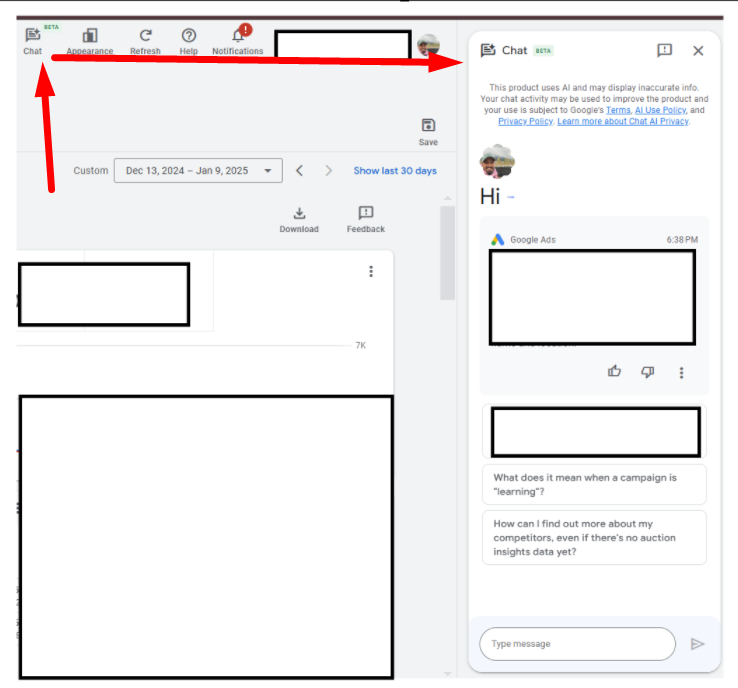
Google is experimenting with a new feature in its Ads platform by introducing a dedicated “Chat” button in the top navigation bar of the advertiser console. This addition aims to make support and query resolution more accessible to advertisers. The “Chat” button, labeled with a “beta” tag, is currently being tested, allowing users to interact with Google’s AI-powered support system directly from their dashboard.

What is the Chat Button?

The new chat button, located at the top-right corner of the Google Ads dashboard, offers advertisers a convenient way to ask questions and receive assistance. This feature leverages artificial intelligence to provide instant, relevant responses to queries about Google Ads campaigns, account management, and more.

Key Features

  1. Quick Accessibility
    • The button’s prominent placement in the top navigation ensures that users can easily find and access it without navigating through multiple menus.
  2. AI-Powered Support
    • The chat system uses AI to handle queries efficiently, offering solutions to common issues and answering frequently asked questions.
  3. Beta Testing
    • Currently in the testing phase, the feature is being evaluated to refine its performance and ensure it meets user needs effectively

How It Works

When users click the “Chat” button, they are directed to a sleek, easy-to-use interface that allows them to input their questions. The AI provides instant responses based on the user’s query.

Potential Use Cases

  • Campaign Assistance: Help with setting up, managing, or troubleshooting ad campaigns.
  • Performance Insights: Instant advice on optimizing campaigns for better results.
  • Technical Support: Guidance on navigating the Google Ads platform or addressing account issues.

Why This Update Matters

1. Enhanced User Experience

By placing the chat button in a more visible location, Google aims to improve the user experience for advertisers, making support more accessible and reducing time spent searching for help.

2. Empowering Advertisers

The integration of AI support directly into the advertiser console provides immediate, actionable insights, helping advertisers make informed decisions quickly.

3. Building on Past Features

This update builds on similar chat features introduced in October 2024, streamlining the way advertisers interact with Google’s support tools.

Community Feedback and Reception

Arpan Banerjee, an industry professional, was among the first to spot this update and shared his findings on social media platform X. His post, accompanied by screenshots, has sparked discussions among advertisers about the potential benefits of this feature.

Advertiser Reactions

  • Positive: Many users appreciate the improved accessibility and see it as a step forward in simplifying campaign management.
  • Concerns: Some advertisers are cautious about relying entirely on AI for complex issues, emphasizing the importance of retaining human support options.

What’s Next?

Google is expected to analyze feedback from the beta testing phase to refine the chat functionality further. While no official timeline has been announced for a full rollout, this feature could become a permanent addition if it proves valuable to advertisers.

Conclusion: A Smart Move for Advertiser Support

Google’s decision to test a dedicated chat button in the Ads console reflects its commitment to enhancing advertiser experience. By integrating AI-powered support into a highly accessible location, Google simplifies the way advertisers seek help, boosting efficiency and satisfaction.

As digital marketing continues to evolve, tools like this highlight the importance of combining convenience with cutting-edge technology to empower users. Advertisers should stay tuned for updates as this feature moves closer to a potential full launch.

Also Read: Google Ads Tests New Chat Button in Advertiser Console

Google Maps Removed from EU Search Results: What It Means for Users and Competitors

For years, Google Maps has been an indispensable tool for millions worldwide, seamlessly integrated into Google’s search results to provide instant access to directions, locations, and navigation services. However, recent changes mandated by the European Union (EU) have forced Google to remove its Maps functionality from search results, marking a significant shift in how users interact with the tech giant’s ecosystem.

The Role of the Digital Markets Act (DMA)

At the heart of this decision lies the Digital Markets Act (DMA), a groundbreaking regulation introduced by the EU to foster competition in the digital marketplace. The DMA aims to curb the dominance of major tech companies like Google by imposing new rules to promote user choice and reduce monopolistic practices.

Google’s seamless integration of services such as Maps, Calendar, and Docs within its search engine has long been criticized for stifling competition. By tightly linking these services, Google created an ecosystem where users rarely needed to explore alternatives. The DMA’s intervention targets this very strategy, starting with the decoupling of Google Maps from search results.

Changes in Google Maps Accessibility

Until recently, searching for a location on Google would display a Maps preview on the search results page, complete with a direct link for navigation. Additionally, the Maps tab, prominently positioned alongside Images and News, allowed users to quickly access Google Maps features. These functionalities have now been removed for EU users.

User Impact

The removal of these features has sparked frustration among users accustomed to the convenience of accessing Maps directly from search results. Instead of a couple of clicks to get directions, users must now navigate to the Google Maps website or app manually. While this may seem like a minor inconvenience, it represents a noticeable change for those who relied on the integration for its speed and ease of use.

For businesses, this change could lead to additional challenges. Companies that previously relied on Google Maps integration within their websites or advertisements may need to adjust their strategies to maintain visibility and ensure customers can access directions to their locations.

Balancing Convenience and Competition

The EU’s decision highlights the ongoing struggle to balance user convenience with fair competition. Google’s dominance in the search engine market, combined with its deep integration of navigation services, left little room for competitors to thrive. By embedding Maps directly into search results, Google effectively consolidated its hold on both the search and mapping markets.

The Competition Perspective

For competitors like HERE WeGo, OpenStreetMap, and TomTom, the DMA’s regulations present a rare opportunity to attract users. With Google Maps no longer automatically linked to search results, alternative navigation services may gain visibility and expand their user bases.

These competitors may now invest in innovative features, improved user interfaces, and marketing campaigns to capture the attention of users who are exploring alternatives.

Broader Implications for Tech Giants

The removal of Maps from Google’s search results is just one example of the DMA’s impact on major tech companies. Similar regulations are compelling other industry leaders, such as Apple, to open their ecosystems to alternative platforms.

Challenges for Google

For Google, compliance with the DMA poses significant challenges. The company must navigate these regulatory changes while striving to maintain user satisfaction. Additionally, the unraveling of its tightly integrated ecosystem may lead to further adjustments in how Google delivers its services.

Google may also face increased scrutiny in other regions, as regulatory bodies worldwide observe the EU’s actions and consider implementing similar measures.

Opportunities for Competitors

Competitors in various domains now have a chance to innovate and capture new audiences. The tech landscape is likely to see increased diversification as companies seek to fill the gaps left by Google’s regulatory adjustments. This could lead to a more dynamic market where smaller players are empowered to compete on equal footing.


The Future of Digital Navigation

These changes reflect a broader movement to reshape how tech companies operate, particularly in Europe. For consumers, the shift may require adapting to less integrated systems, but it also promises a more open and competitive digital environment. For Google, it serves as a reminder that even industry giants must evolve in response to regulatory scrutiny.

A New Digital Landscape

While the short-term inconvenience may frustrate users, the long-term effects could lead to a more diverse and innovative tech ecosystem. By breaking up monopolistic structures, the DMA aims to foster an environment where no single company dominates, ensuring that user choice and innovation thrive.

For users, this change highlights the importance of exploring and supporting alternative platforms to ensure a more balanced digital ecosystem. For companies, it’s a call to innovate, collaborate, and adapt to a rapidly evolving regulatory environment.

Also Read: 5 Best Sites to Buy Facebook Likes for Pages, Posts, and Photos in 2025


FAQs

1. Why did Google remove Maps from search results in the EU? Google complied with the EU’s Digital Markets Act, which requires tech companies to decouple integrated services to promote competition.

2. How does this affect users? Users in the EU can no longer access Maps previews or the Maps tab directly from search results. They must visit the Google Maps website or app instead.

3. What is the Digital Markets Act (DMA)? The DMA is an EU regulation designed to challenge the dominance of major tech companies and create a more competitive digital marketplace.

4. Will other tech companies be affected by similar regulations? Yes, other tech giants like Apple are also required to make changes, such as opening their App Store to alternative platforms.

5. Are there alternatives to Google Maps? Yes, alternatives like HERE WeGo, OpenStreetMap, and TomTom offer navigation services and may gain more visibility due to these changes.

6. What does this mean for businesses? Businesses that rely on Google Maps integration may need to adjust their strategies and direct customers to their locations using alternative methods.

5 Best Sites to Buy Facebook Likes for Pages, Posts, and Photos in 2025

Facebook continues to dominate the social media landscape in 2025, making it a critical platform for brands, businesses, and influencers to establish an impactful presence. However, standing out amidst the competition is increasingly challenging, especially when organic growth strategies take time and effort.

One solution to accelerate your growth is buying Facebook likes, a strategy that provides an immediate boost to your page’s visibility, credibility, and engagement. This guide highlights the best platforms to buy Facebook likes ethically, explores alternative strategies for sustainable growth, and offers actionable tips to maximize your impact.

Disclaimer: Navigating Ethical Concerns

While buying Facebook likes can serve as a powerful growth hack, it’s essential to approach this strategy ethically. Focus on providers that deliver real engagement from active users rather than bots or fake profiles. Misusing this tactic can harm your brand’s credibility and lead to penalties under Facebook’s policies.

Remember: purchased likes should complement organic growth strategies rather than replace them. Authentic engagement remains the cornerstone of long-term success on social media.

Why Buy Facebook Likes?

1. Amplified Visibility

Facebook’s algorithm favors content that garners high engagement. Posts with more likes and interactions are likely to appear higher in users’ feeds, driving organic reach and visibility.

2. Enhanced Credibility

A significant number of likes signals trustworthiness and popularity, making your brand appear more credible to new users.

3. Jumpstart Your Growth

For new pages or those struggling with engagement, buying likes provides a much-needed boost to get noticed and attract authentic followers.

4. Improved Social Proof

Likes act as a form of social proof, encouraging other users to engage with your content and explore your brand further.

Top 5 Ethical Sites to Buy Facebook Likes in 2025

1. UseViral

Rating: 9.8/10
Overview: UseViral leads the pack with its high-quality likes from active users and customizable packages tailored to various needs. Whether you’re an influencer, a small business, or a large brand, UseViral offers reliable solutions to boost your Facebook presence.

Key Features

  • Real user engagement ensures authenticity and credibility.
  • Flexible packages catering to different budgets and goals.
  • Discounts for bulk purchases and a 7-day money-back guarantee.

Why Choose UseViral?

UseViral is ideal for businesses seeking a cost-effective and ethical solution to enhance their social media presence. Its strong customer support and transparent policies make it a trusted choice.

2. SidesMedia

Rating: 9.5/10
Overview: With its focus on fast delivery and customer satisfaction, SidesMedia is a top contender for those looking to enhance their Facebook engagement.

Key Features

  • Likes sourced from real, active Facebook users.
  • Options to customize packages based on specific needs.
  • 24/7 customer support ensures a seamless experience.

Why Choose SidesMedia?

SidesMedia is perfect for marketers who value speed, reliability, and tailored solutions to align with their growth strategies.

3. Growthoid

Rating: 9.2/10
Overview: Growthoid stands out by emphasizing organic and natural growth, offering a personalized approach to social media marketing.

Key Features

  • Likes delivered strategically to target the right audience.
  • Cost-effective packages designed to maximize ROI.
  • Expert advice to guide your social media strategy.

Why Choose Growthoid?

If you’re seeking a long-term solution for sustainable engagement, Growthoid’s personalized approach makes it a standout choice.

4. TweSocial

Rating: 9/10
Overview: TweSocial focuses on maintaining privacy and aligning with Facebook’s algorithm, offering a secure and adaptable service for boosting likes.

Key Features

  • Dynamic strategies to adapt to platform updates.
  • Multi-platform support for holistic growth.
  • A strong commitment to data privacy and security.

Why Choose TweSocial?

TweSocial is an excellent option for users who prioritize security, adaptability, and privacy in their social media growth journey.

5. TokUpgrade

Rating: 8.8/10
Overview: TokUpgrade combines strategic insights with innovative solutions to deliver a comprehensive package for Facebook growth.

Key Features

  • Insightful metrics to track and optimize performance.
  • Customizable packages for brands with unique goals.
  • Emphasis on organic-like engagement for authenticity.

Why Choose TokUpgrade?

TokUpgrade is ideal for brands looking to enhance their credibility while gaining actionable insights for future campaigns.

Alternative Strategies for Facebook Growth

1. High-Quality Content Creation

  • Visuals: Use high-resolution images, engaging videos, and infographics to captivate your audience.
  • Storytelling: Craft compelling narratives to establish an emotional connection with your followers.

2. Leverage Facebook Ads

  • Targeted Campaigns: Use detailed targeting options to reach specific demographics.
  • Retargeting: Re-engage users who’ve interacted with your page or website.

3. Build a Community

  • Join and actively participate in relevant Facebook groups.
  • Respond to comments and messages to foster a sense of community.

4. Collaborate with Influencers

  • Partner with influencers who share a similar audience to expand your reach.
  • Host joint campaigns, giveaways, or live sessions.

Maximizing the Impact of Purchased Likes

To ensure your investment pays off, combine purchased likes with other strategies:

  1. Engage Actively: Respond to comments and encourage discussions.
  2. Track Metrics: Use Facebook Insights to measure engagement and refine your approach.
  3. Run Contests: Leverage your boosted visibility to host contests and encourage organic participation.

Ethical Considerations When Buying Likes

  1. Choose Reputable Providers: Stick to platforms like UseViral and Growthoid that prioritize real user engagement.
  2. Avoid Fake Accounts: Likes from bots can harm your page’s credibility and lead to penalties.
  3. Transparency: Be upfront with your audience about your strategies, ensuring trust and authenticity.

Conclusion

Buying Facebook likes can be a valuable tool for accelerating your social media growth in 2025, but it must be done ethically and strategically. Platforms like UseViral, SidesMedia, and Growthoid offer reliable solutions tailored to diverse needs.

However, remember that success on Facebook relies on a balanced approach—combine purchased likes with organic strategies like high-quality content, engaging visuals, and meaningful interactions. Start building your Facebook presence today and unlock new opportunities for growth and engagement.


FAQs

1. Is buying Facebook likes safe?

Yes, provided you use ethical platforms like UseViral or SidesMedia that guarantee real engagement. Avoid services relying on bots or fake accounts.

2. How can I combine purchased likes with organic growth?

Engage with your audience, create high-quality content, and use tools like Facebook Ads to complement your purchased likes.

3. Will buying likes improve my page’s ranking?

While purchased likes boost visibility and credibility, consistent posting and active engagement are necessary for long-term success.

4. Are the purchased likes permanent?

Reputable providers offer high retention rates, but some fluctuation may occur.

5. What should I avoid when buying likes?

Avoid providers selling fake likes or bots, as they can harm your credibility and lead to account issues.

Understanding the CMA’s Assessment of Google Search

On January 14, 2025, the Competition and Markets Authority (CMA) in the United Kingdom announced its plans to evaluate whether Google Search holds “Strategic Market Status” (SMS) under the newly implemented Digital Markets, Competition and Consumers regime. This assessment could lead to the introduction of new regulatory requirements for Google Search.

Here’s a closer look at what this means for Google, the UK economy, and consumers alike.

Why is Google Search Under Assessment?

The CMA’s assessment aims to determine whether Google’s dominance in the search engine market significantly impacts competition and consumer choice. The evaluation will explore how Google’s operations align with the UK’s goals for fair competition, innovation, and economic growth.

Key Points Driving the Assessment:

  • Market Influence: Google Search is a cornerstone of the digital economy, widely used by UK consumers and businesses.
  • Economic Contribution: In 2023, Google’s products, including Search, contributed an estimated £118 billion to the UK economy, supporting over a million businesses.
  • Export Facilitation: Google Search and Ads played a pivotal role in helping UK businesses export goods and services worth over £20 billion globally.

The Economic Importance of Search

Search engines like Google are integral to modern economies, especially in digitally advanced countries like the UK.

How Google Search Supports Growth:

  1. Empowering Businesses:
    Google Search enables millions of UK businesses to grow by increasing their visibility and connecting them with customers, both locally and internationally.
  2. Driving Innovation:
    Through tools like Google Ads, businesses can reach niche markets, test new products, and experiment with creative marketing strategies.
  3. Enhancing Consumer Choice:
    By delivering fast, relevant results, Google Search helps consumers make informed decisions on products, services, and more.

The Role of Regulations in Digital Markets

The CMA’s evaluation comes as part of a broader effort to create a regulatory framework that ensures fair competition in the digital space.

Proposed Outcomes of the Assessment:

  • Pro-Innovation Rules: A regulatory environment that fosters innovation could expand options for consumers, reduce costs, and unlock new opportunities for businesses.
  • Potential Risks of Over-Regulation: Overly rigid competition rules might limit flexibility, stifle innovation, and reduce consumer choice.

Google’s Commitment to Constructive Engagement

Google has expressed its willingness to work collaboratively with the CMA, emphasizing its commitment to aligning with evidence-based and growth-oriented regulatory goals.

Google’s Advocacy:

  • Balancing Trade-Offs: Google aims to highlight how its services benefit both consumers and businesses while addressing any potential concerns about market dominance.
  • Supporting Pro-Innovation Policies: The company underscores the importance of policies that encourage technological advancement and economic growth without restricting innovation.

Why This Matters for Consumers and Businesses

The outcome of the CMA’s assessment could shape the future of digital competition in the UK.

For Consumers:

  • A pro-innovation framework could lead to more choices and better services.
  • Over-regulation might reduce the availability of cutting-edge digital tools.

For Businesses:

  • Small and medium-sized enterprises (SMEs) could benefit from a fairer playing field.
  • Changes in Google’s practices could open doors for alternative platforms to compete.

Conclusion: Striking the Right Balance

The CMA’s review of Google Search represents an important step in defining the role of digital platforms in the UK’s economy. Striking the right balance between innovation and fair competition will be crucial for fostering a dynamic and inclusive digital landscape.

Google’s contributions to economic growth and its willingness to engage constructively highlight its pivotal role in this evolving narrative. Ultimately, a regulatory framework that promotes innovation and ensures fair competition will empower businesses, benefit consumers, and support the UK’s digital transformation goals.

As the CMA’s assessment unfolds, the focus will remain on achieving a balance that drives both economic growth and consumer satisfaction in an increasingly digital world.

Also Read: Google Lens Update: Launches Directly to Camera Viewfinder

How to Stop Facebook and Instagram from Mining Your Data

Social media platforms like Facebook and Instagram have become deeply embedded in our daily routines, social media platforms like Facebook and Instagram have become integral to our daily lives. Owned by Meta, these platforms collect vast amounts of user data to improve functionality, personalize ads, and deliver tailored content. However, the scale and depth of this data collection can often feel invasive, raising serious privacy concerns. While it’s difficult to completely prevent Meta from collecting your data, there are actionable steps you can take to limit how much information is mined and how it’s used.

Here’s a detailed guide to taking back control of your online privacy.

Why Do Facebook and Instagram Collect Your Data?

Meta collects your data for several reasons, including:

  • Personalized Ads: Ads tailored to your browsing habits and interests are more likely to engage you.
  • Improved User Experience: Data is used to refine app features, suggest connections, and enhance content recommendations.
  • Market Insights: Meta analyzes aggregated data for trends and insights to guide its business decisions.

While these reasons seem legitimate, many users feel uncomfortable knowing that their likes, clicks, browsing history, and even locations are being meticulously tracked. This makes it crucial for users to be aware of how to reduce the amount of data they share.

Steps to Stop Facebook and Instagram from Mining Your Data

1. Clear Your Off-Meta Activity

Meta tracks your activities beyond its platforms through a feature called “Off-Meta Activity.” This allows Facebook and Instagram to monitor what you do on external websites and apps and use that information for targeted advertising. Follow these steps to clear and control this activity:

  1. Open the Account Center in your app settings.
  2. Navigate to Your Information and Permissions.
  3. Select Your Activity Off Meta Technologies.
  4. Tap Clear Previous Activity to remove data that has already been collected.
  5. Go to Manage Future Activity and toggle the option off to prevent further tracking.

This action ensures that your off-Meta activity isn’t used to personalize ads or other platform features.

2. Adjust Ad Preferences

Ad preferences allow you to control the kind of data Meta uses to show you personalized ads. To adjust these settings:

  1. Open Ad Preferences from the settings menu.
  2. Click on Activity Information from Ad Partners.
  3. Review the list of advertisers with your data and disable access where necessary.
  4. Turn off Interest-Based Ads to limit targeted advertising.

While these changes won’t eliminate ads on your feed, they will reduce personalization, offering you more generic content instead.

Additional Steps to Protect Your Privacy

1. Review and Update Privacy Settings

Facebook and Instagram allow you to control what information is visible to others. Regularly review your privacy settings and:

  • Limit who can see your posts.
  • Restrict visibility of your personal information like phone numbers and email addresses.
  • Disable location sharing for posts.

2. Restrict App Permissions

Meta collects data through app permissions on your device. To reduce unnecessary access:

  • Go to your device’s settings.
  • Review permissions for Facebook and Instagram.
  • Disable access to your location, microphone, camera, and contacts unless required for specific functions.

3. Disconnect Third-Party Apps

Third-party apps linked to your Facebook or Instagram account can be another source of data mining. To manage these connections:

  • Navigate to Apps and Websites in your settings.
  • Review the list of connected apps and remove any you no longer use or trust.

4. Avoid Using Facebook/Instagram Login for Other Services

Using your Facebook or Instagram account to log into other services might be convenient, but it also allows these platforms to share data. Opt for unique login credentials for each service instead.

Implications of Limiting Data Collection

While reducing data sharing enhances your privacy, it also comes with trade-offs:

1. Less Personalized Content

Ads and content recommendations will no longer align closely with your preferences, making the user experience less tailored.

2. Limited App Functionality

Some features, such as location-based suggestions or personalized shopping recommendations, may not work as effectively.

3. Delayed Changes

Meta states that changes to privacy settings can take up to 48 hours to fully reflect. Be patient and monitor your experience for improvements.

Broader Context: Meta’s Privacy Policies

Meta’s data practices have come under scrutiny over the years. Recently, the company announced significant policy changes, including the elimination of its fact-checking program. This move has sparked debates about misinformation and privacy concerns. While Meta claims to be moving toward greater freedom of expression, users are increasingly wary of the potential implications for data security.

By taking proactive steps to limit data mining, users can regain a sense of control in an era where privacy often feels compromised.

Practical Tips for Long-Term Privacy Management

1. Stay Updated on Privacy Laws

  • Familiarize yourself with global data protection regulations like GDPR and POPIA.
  • Ensure your settings comply with local privacy laws to safeguard your rights.

2. Use Privacy-Focused Tools

  • Install browser extensions like Privacy Badger or uBlock Origin to block trackers.
  • Consider VPN services to anonymize your browsing.

3. Educate Yourself

  • Follow credible sources for updates on digital privacy and cybersecurity.
  • Regularly review privacy-focused guides and adjust your settings accordingly.

Conclusion: Take Charge of Your Digital Privacy

Facebook and Instagram offer immense opportunities for connection and engagement, but their data collection practices highlight the importance of user vigilance. By clearing off-Meta activity, adjusting ad preferences, and using privacy tools, you can significantly reduce the amount of data these platforms collect.

The digital world thrives on data, but with the right strategies, you can strike a balance between enjoying these platforms and protecting your personal information. Take control today—your privacy is worth it.

Also Read: Google to Update Advertising Policies on January 15 to Combat Financial Scams